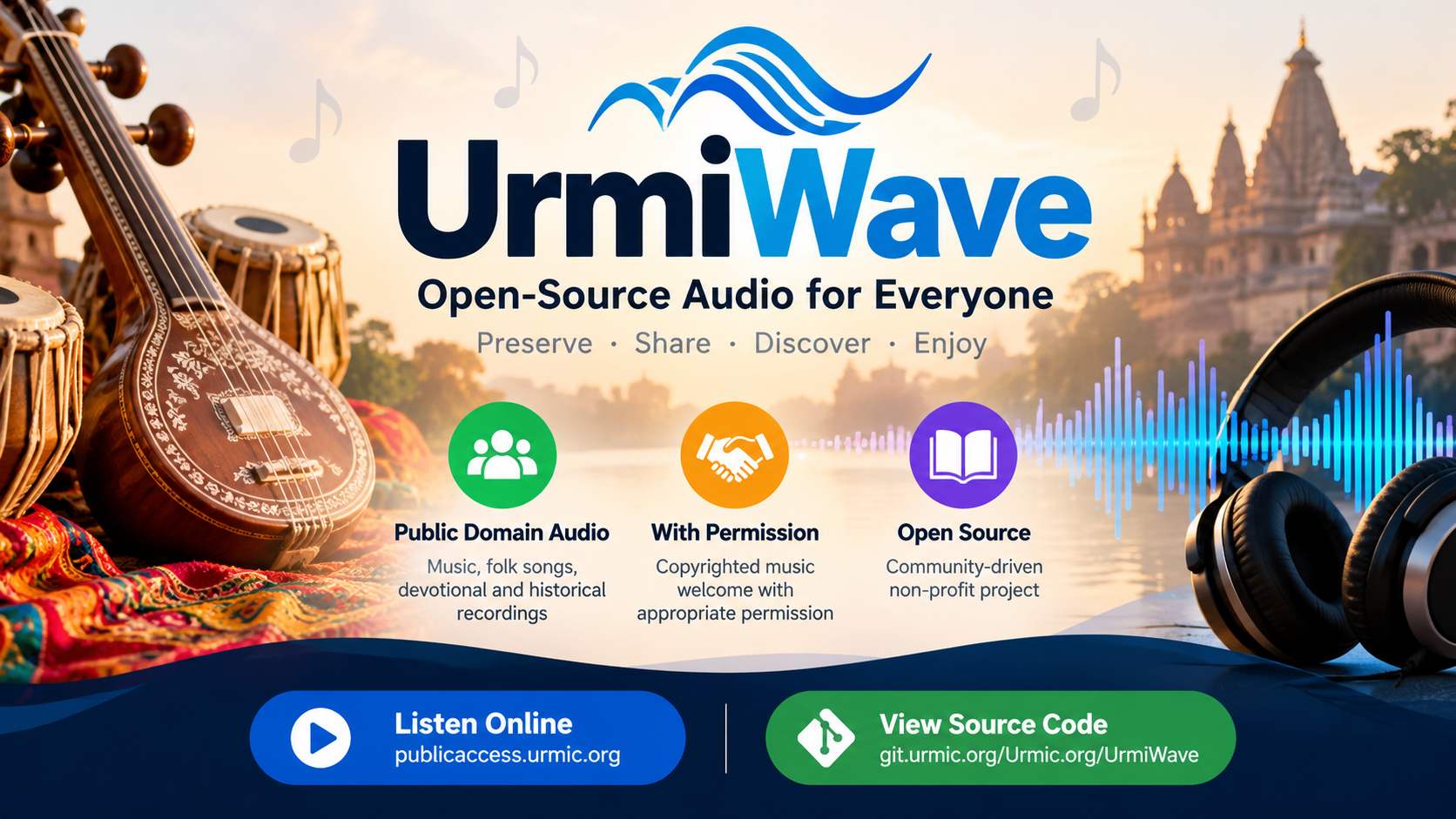
UrmiWave is an open-source, non-profit audio project dedicated to making audio accessible to everyone and preserving musical and cultural heritage.
We welcome public-domain audio recordings, including music, folk songs, devotional songs, and historical recordings. Copyrighted music is also welcome when the copyright holder has granted permission for its distribution.
Our mission is to preserve valuable audio recordings and make legally shareable audio accessible to the public.
Listen to UrmiWave Live 24×7
Explore the public audio platform: Visit UrmiWave Public Access
Contribute to the Project
We welcome contributions from individuals, musicians, collectors, and communities.
You can contribute:
- Public-domain music and audio recordings.
- Folk songs and traditional music.
- Devotional and cultural recordings.
- Historical audio recordings.
- Copyrighted music with appropriate permission from the copyright holder.
Please ensure that all submitted recordings can legally be shared and distributed.
Explore the Source Code
UrmiWave is an open-source project. Developers and contributors are welcome to explore the source code and participate in its development.
View UrmiWave Source Code on Git
Developers and contributors are welcome to explore the repository and participate in the project.
Join Us in Preserving Audio Heritage
Every recording has a story. By sharing legally distributable audio, you can help preserve music, culture, and history for future generations.
Listen. Contribute. Preserve. Share.
Project: UrmiWave
Organization: Urmic.org
Public Access: https://publicaccess.urmic.org/
Source Code: https://git.urmic.org/Urmic.org/UrmiWave
UrmiWave is a non-profit initiative. All submitted recordings must be in the public domain or shared with appropriate permission from the relevant copyright holders.