
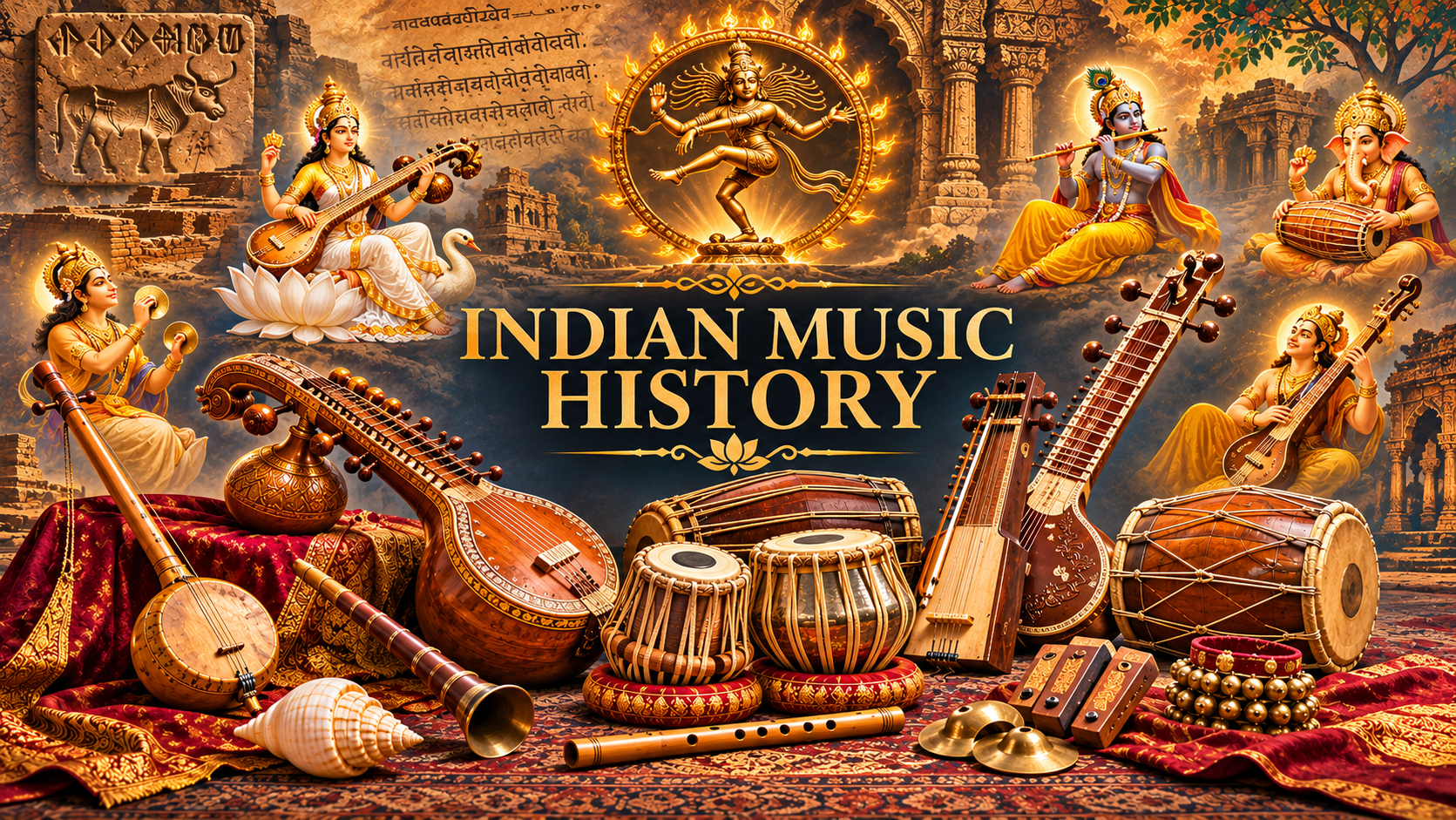
Hindu’s Inherited Divine eternal cosmic music pass down by ancestors as emotion , wisdom , history and more then that way of life . Expressed by various Vadya like . . .
- Tata Vadya (Stringed): Veena, Ektara, Sarangi, Sitar
- Sushira Vadya (Wind): Bansuri (Flute), Shankha (Conch), Shehnai
- Avanaddha Vadya (Membrane Drums): Dundubhi, Mridangam, Pakhawaj, Dholak, Tabla
- Ghana Vadya (Solid Percussion): Manjira, Kartal, Ghatam, Ghungroo
This instruments flamed most vibrant emotion we ever felt . Bharata Muni defined eight core Rasas, and Abhinavagupta later formalized the ninth (Shanta), creating the Navarasa
- Shringara Ras ( Love, beauty, longing, devotion )
- Veera Ras ( Heroism, courage, pride, energy )
- Karuna Ras ( Compassion, pathos, grief, separation )
- Raudra Ras ( Fury, righteous anger, intensity )
- Hasya Ras ( Joy, humor, playfulness )
- Bhayanaka Ras ( Fear, awe, suspense )
- Bibhatsa Ras ( Disgust, aversion, eerie tension )
- Adbhuta Ras ( Wonder, amazement, transcendence )
- Shanta Ras ( Peace, stillness, spiritual liberation )
We can able to provide proof and confirm where we find INDIAN civilization we find our musical heritage the way threads (dora) are interlaced to form fabric (kapad)
- c. 3300 – 1300 BCE
- Indus Valley Civilization (Archaeological Evidence)
- Excavations at Harappa and Mohenjo-daro uncovered terracotta drums, clay whistles, bronze cymbal discs (proto-Manjira), and seals depicting bow-shaped arched harps (proto-Veena) alongside dancing figures.
- c. 1500 – 1000 BCE
- Early Vedic Period (Rigveda & Samaveda)
- Texts explicitly name the Venu (bamboo flute), Dundubhi (large earth/war drum), Gargara (string instrument), and early Veena (harp-like lutes with up to 100 strings) used in ritual chants and community celebrations.
- c. 1000 – 400 BCE
- Later Vedic & Epic Era (Ramayana & Mahabharata)
- The Shankha (conch shell), Bheri (kettle drum), Kansya (bronze cymbals/Manjira), and Vipanchi Veena appear prominently in battle scenes, royal courts, and hermitages.
- c. 200 BCE – 500 CE
- Classical & Natya Shastra Era
- Sculptures at Sanchi, Bharhut, and Amaravati depict transverse Bansuri flutes, Manjira, and barrel-shaped Mridangam drums. The arched harp gradually evolves into fretted stick-zithers and early lutes.
- c. 600 – 1750 CE
- Medieval & Bhakti-Sufi Synthesis
- Manjira, Kartal, and Ektara become the core instruments of poet-saints (Mirabai, Kabir, Tukaram). Meanwhile, the modern fretted Saraswati Veena, Sarangi, Sitar, and Tabla take shape.